2026.08.12
NEWS RELEASE

Kyoto Fusioneering to Relocate U.S. HQ to Tennessee and Deliver UNITY-3 with ORNL, a First-of-Its-Kind Facility to De-Risk Fusion Technology

HOME > NEWS > Kyoto Fusioneering to Relocate U.S. HQ to Tennessee and Deliver UNITY-3 with ORNL, a First-of-Its-Kind Facility to De-Risk Fusion Technology

Backed by Tennessee’s Nuclear Energy Supply Chain Investment Fund and the U.S. Department of Energy, KF and ORNL will build the breeding blanket validation infrastructure the DOE’s new Fusion Science & Technology Roadmap identifies as a critical national need.

OAK RIDGE, Tenn. — Kyoto Fusioneering (KF) is building UNITY-3, a first-of-its-kind facility to validate the tritium breeding blanket technology that every future fusion power plant will depend on — and is relocating its U.S. headquarters to Oak Ridge, Tennessee, to build it with Oak Ridge National Laboratory (ORNL). The facility addresses a national priority identified in the U.S. Department of Energy’s (DOE) newly finalized Fusion Science & Technology (FS&T) Roadmap. UNITY-3 has received funding from the DOE and will be delivered through a public-private partnership. The State of Tennessee is supporting the relocation and project through its Nuclear Energy Supply Chain Investment Fund. It marks an inflection point for the U.S. and global fusion industry: the shared infrastructure needed to prove, at scale, what no single fusion program has yet validated. The facility deepens the strategic partnership KF, DOE, and ORNL launched in January 2026.

(See related releases from the State of Tennessee and Oak Ridge National Laboratory.)

“Commercializing fusion is no longer primarily a physics challenge; it is increasingly an engineering and technology challenge. Our expansion to Tennessee represents a deliberate bridging of world-class fusion capabilities: matching Japan’s decades of specialized engineering heritage with America’s premier nuclear innovation ecosystem. By delivering UNITY-3 alongside ORNL, we are establishing the foundational, shared infrastructure required to accelerate a viable, commercial fusion industry globally.”
— Dr. Satoshi Konishi, Co-Founder and CEO, Kyoto Fusioneering

UNITY-3 Impact

More than $12 billion in private capital has now flowed into fusion worldwide — over $3.5 billion in the past year alone, according to the Fusion Industry Association’s 2026 Global Fusion Industry Report. Yet that momentum runs up against a gating risk for the whole sector: the breeding blanket. A fusion power plant runs on tritium, a hydrogen isotope that barely exists in nature, so the plant must breed its own fuel inside a lithium-bearing shell wrapped around the fusion reaction. No commercial deuterium-tritium (D-T) fusion power plant can run without one that works reliably, and blanket and fuel cycle technologies remain among the least mature systems in fusion. UNITY-3 will help close that gap. Using an accelerator-based volumetric D-T fusion neutron source, it will validate tritium breeding blanket performance by measuring neutron spectrum and tritium production in neutronically prototypic blankets — benchmarking and de-risking the simulation codes the industry relies on to design power plants. No other operating or planned facility combines that source geometry, test-article scale, and depth-resolved measurement capability.

DOE’s Fusion Science & Technology Roadmap identifies “integrated neutron and blanket systems” as essential infrastructure for closing the fuel cycle gaps that separate today’s experiments from a fusion pilot plant (FPP). UNITY-3 will deliver that capability. It also has an important role to play in DOE’s broader vision for AI-accelerated science. The data it generates — high-fidelity measurements of fusion neutronics and tritium production that have never before been captured — are precisely the data needed to train, benchmark, and validate the digital tools at the core of the AI-Fusion Digital Convergence Platform (DCP), a flagship challenge of the DOE Genesis Mission. UNITY-3 thus serves as both a physical test bed and a foundational data source for the predictive, simulation-driven design environment the Genesis Mission is building to compress the timeline to commercial fusion power.

“Oak Ridge National Laboratory has helped lead the nation in nuclear science advancements for more than eight decades, and fusion is an important part of that legacy. Pairing Kyoto Fusioneering’s deep expertise in fusion technology and integrated systems with ORNL’s strengths in neutron science, materials, advanced manufacturing, and computing gives the United States a place to answer one of fusion’s hardest questions — how breeding blankets perform in a real nuclear environment. We’re proud to partner on UNITY-3 and to help build the shared infrastructure the fusion community depends on.”
— Dr. Stephen Streiffer, Director, Oak Ridge National Laboratory

“Oak Ridge has spent generations building the hard things that defined the nuclear age, and it is the ideal home for the next chapter in advanced energy. Every commercial fusion power plant design today relies on a breeding blanket that works, yet the entire sector has been constrained by a total absence of real-world testing infrastructure. UNITY-3 solves that industry-wide gating risk. By building an open, confinement-agnostic testing ground with ORNL, we are saving developers from absorbing immense vertical integration costs alone. We came to East Tennessee to build a physical anchor for an allied fusion supply chain — we intend to manufacture here, hire here, and solve this shared problem together.”
— Bibake Uppal, President, Kyoto Fusioneering America

U.S. HQ Relocation to Oak Ridge

The relocation and project are supported by Tennessee Department of Economic and Community Development’s Nuclear Energy Supply Chain Investment Fund. KF chose East Tennessee for the same reasons the region has become a national hub of America’s nuclear resurgence: one of the deepest concentrations of nuclear expertise anchored by ORNL; a deep and growing supply chain; a skilled technical workforce; a pro-investment business climate; and a community with a long nuclear heritage and strong public support for the technology. By locating where the broader nuclear sector already operates, KF can draw on talent, supply chains, and infrastructure built over decades — while connecting the region to KF’s established global network.

The investment also brings Japan’s decades of world-leading fusion engineering directly to East Tennessee. As Japan’s largest and most advanced fusion company, with foundational expertise in breeding blankets, the tritium fuel cycle, and plasma heating systems, KF anchors its capabilities in Oak Ridge and will build allied supply chains with a meaningful local footprint: supplying hardware, components, and engineering services while cultivating the specialized fusion and nuclear workforce the industry will need to scale.

“Today’s announcement from KF further cements Tennessee’s leadership in delivering the next generation of safe, reliable energy. By partnering with ORNL and locating in Oak Ridge, the company is poised to accelerate its growth and innovation while strengthening our state’s nuclear energy ecosystem. This collaboration will create new opportunities for Tennesseans to step into cutting-edge roles and help shape the future of advanced energy.”
— Bill Lee, Governor of Tennessee

“This project brings together two of our top priorities: nuclear innovation and foreign direct investment. By combining Tennessee’s leadership in advanced energy with Japan’s longstanding support, we’re creating new opportunity and momentum for growth, and we are proud to welcome KF as the next chapter in this collaboration.”
— Stuart C. McWhorter, Deputy Gov. and TNECD Commissioner

“TVA is honored to support a project that will create high‑quality jobs and drive groundbreaking research across the Tennessee Valley. KF’s transformational investment in Oak Ridge further supports the Valley’s leadership in scientific and energy innovation and reflects the strength of partnerships as we work together to unleash American energy.”
Heidi Smith, Vice President of Economic Development, TVA

“The Oak Ridge Corridor has long been where world-changing energy technologies move from idea to reality. Kyoto Fusioneering’s decision to locate here reflects the strength of this region’s unmatched ecosystem of research, industry, and talent. At ETEC, we are proud to help build the partnerships that make growth like this possible, and we look forward to supporting Kyoto Fusioneering as they become part of Tennessee’s energy story.”
— Tracy Boatner, President & CEO, East Tennessee Economic Council

An Industry Enabler

KF operates deliberately as an industry enabler. Most fusion developers are concentrating their capital and expertise on plasma confinement, leaving the blanket, fuel cycle, and balance-of-plant systems that turn a physics experiment into a power source comparatively underdeveloped. Without shared infrastructure and a trusted partner to mature those systems, individual companies are pushed toward full vertical integration — absorbing cost, schedule, and technical risk that few can carry alone and that the industry as a whole cannot afford to see fail. By building UNITY-3 as open, confinement-agnostic infrastructure, KF and ORNL support the entire sector in retiring that risk, so developers can focus on what they do best. By concentrating one of the sector’s hardest shared problems in a single facility, UNITY-3 also makes the capital now flowing into fusion go further — advancing power plant designs rather than re-solving the same foundational problem in parallel.

That demand is already visible across the sector. Leading companies in fusion — including General Atomics, OpenStar Technologies, Realta Fusion, Thea Energy, Type One Energy, Xcimer Energy, and several others — have expressed support for UNITY-3 as shared infrastructure to help validate breeding blanket technologies across a range of confinement approaches and breeder concepts. It is exactly this kind of cross-industry demand that no single company’s roadmap can serve, and that shared, confinement-agnostic infrastructure is built to meet.

“Tritium breeding is a critical process that all companies pursuing deuterium-tritium (DT) fusion reactions will have to operate. It makes sense to have a joint effort to figure this out, and we’re very supportive of Kyoto Fusioneering, ORNL and their UNITY-3 project. This is a critical stepping-stone towards commercial fusion energy, and we hope to see more collaborative work and facilities solving issues that are common across the fusion industry.”
— Kieran Furlong, CEO and Co-Founder, Realta Fusion

“Thea Energy welcomes the addition of UNITY-3 to the national fusion test infrastructure. The ability to test blanket components under high-energy fusion neutrons would allow all deuterium-tritium power plant architectures to proceed more confidently to the plant scale. This facility complements Thea Energy’s own fusion blanket and materials development program.”
— Brian Berzin, Co-Founder and CEO, Thea Energy

“UNITY-3 will provide one of the several key test capabilities that will help validate our blanket design—the ability to measure tritium production in prototypes using a fusion-relevant, D-T neutron source. The prototypic neutron energy spectrum and planar source geometry will provide a very representative test environment and its location in East Tennessee is ideal for the involvement of our blanket design team in the experiments.”
— Dr. Paul Humrickhouse, Principal Nuclear Engineer, Type One Energy

The UNITY Program

UNITY-3 is the nuclear element of a coordinated, staged de-risking program. KF’s UNITY™ (Unique Integrated Testing Facility) Program tackles the blanket and fuel cycle challenge through separate-effects testing — isolating each distinct class of physics in a purpose-built facility before they are brought together, such as in an Integrated Blanket and Fuel Cycle Test Facility (IB-FCTF) or FPP.

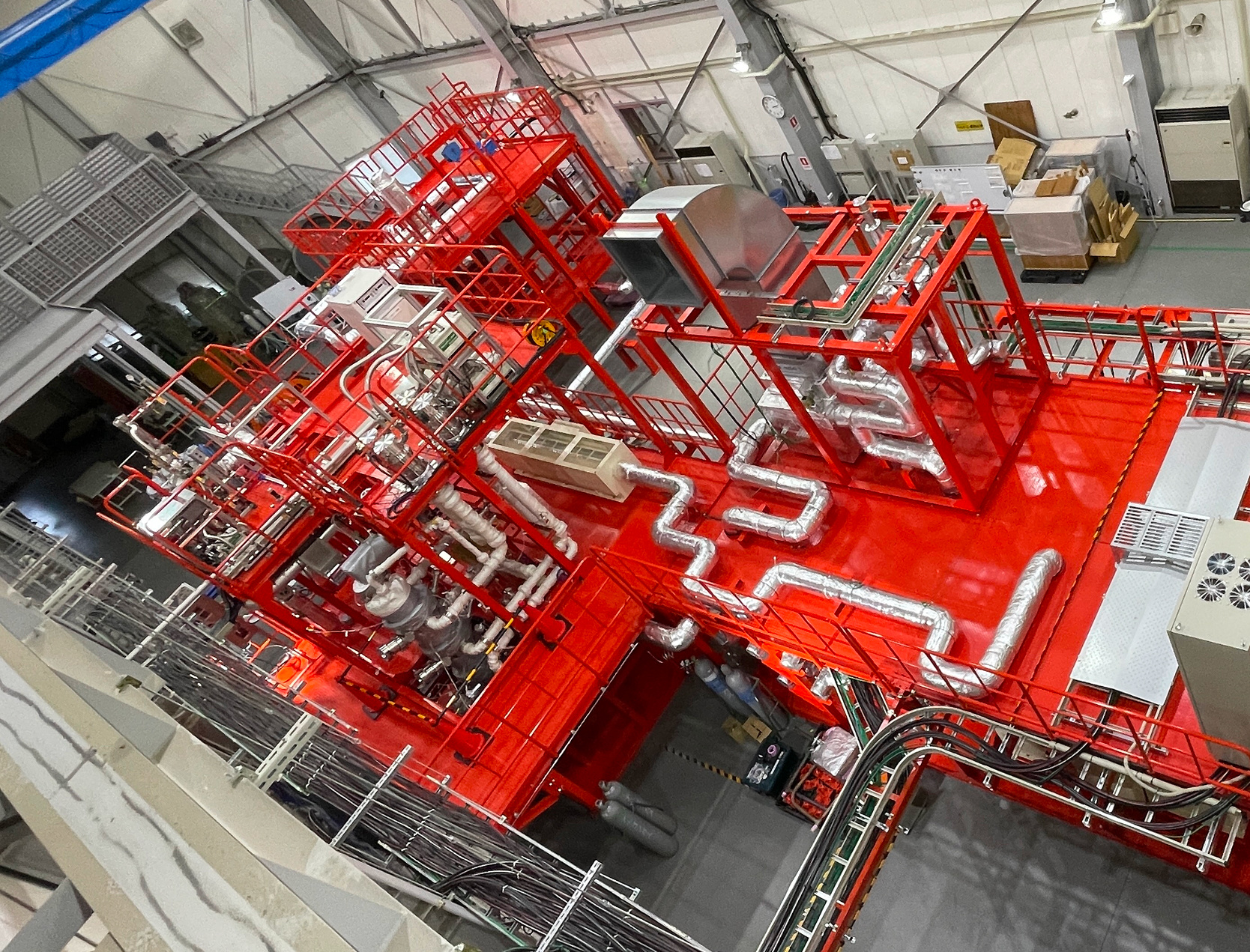
  1. UNITY-1, operating in Kyoto, Japan, resolves the non-nuclear behavior of a liquid-metal breeding blanket: thermal-hydraulics, magnetohydrodynamic effects, hydrogen isotope extraction, materials compatibility, high-temperature heat extraction, and power generation.
  2. UNITY-2, under development in Ontario through Fusion Fuel Cycles, a joint venture with Canadian Nuclear Laboratories, will demonstrate the world’s first continuous, end-to-end D-T fuel cycle in power-plant-relevant conditions.
  3. UNITY-3 adds the critical fusion-nuclear dimension — the neutronics, tritium production validation, and transmutation effects that can only be measured in a real fusion-neutron environment.

Each facility retires a different category of risk; together they validate the blanket and fuel cycle systems and supply the data and components needed before full-scale integration. Across the program, KF is partnering with the U.S. national laboratory complex, with ongoing collaborations on UNITY-1 with Idaho National Laboratory, UNITY-2 with Savannah River National Laboratory, and UNITY-3 with Oak Ridge National Laboratory.

About Kyoto Fusioneering

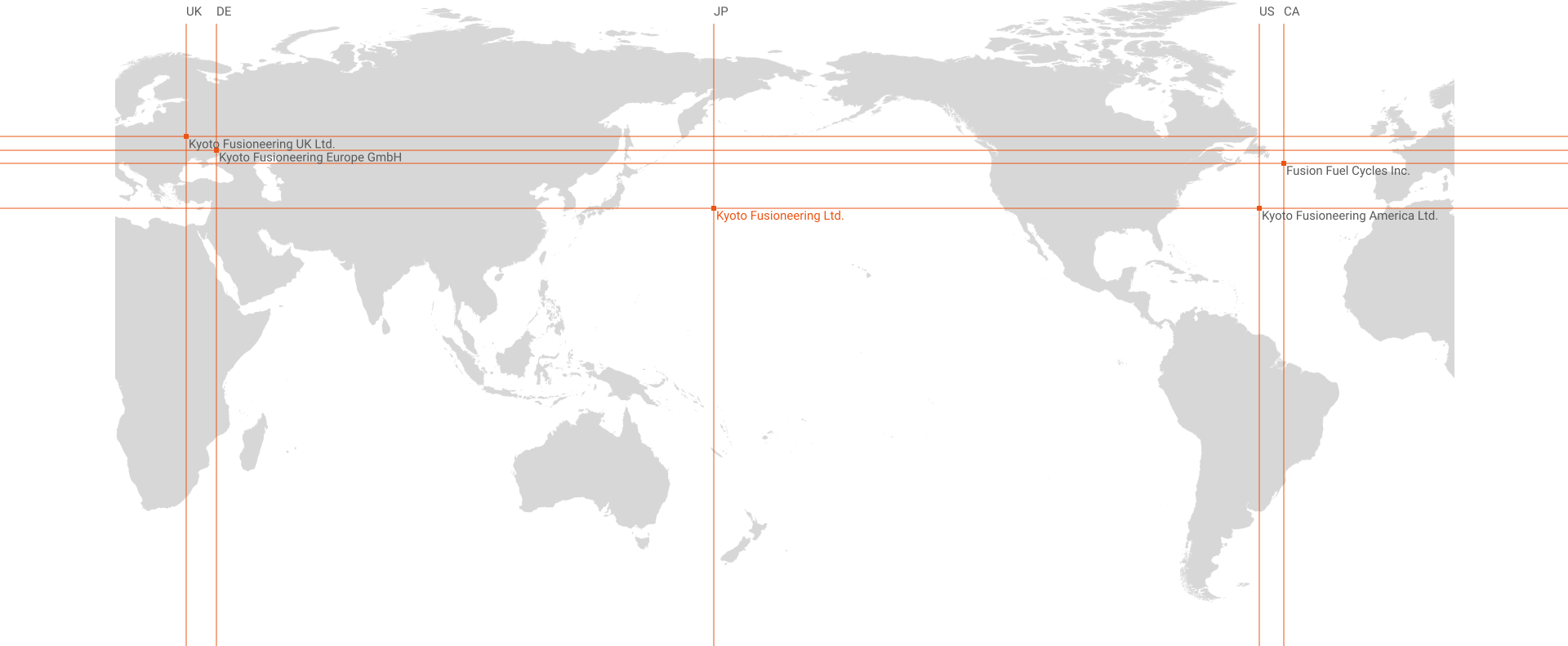
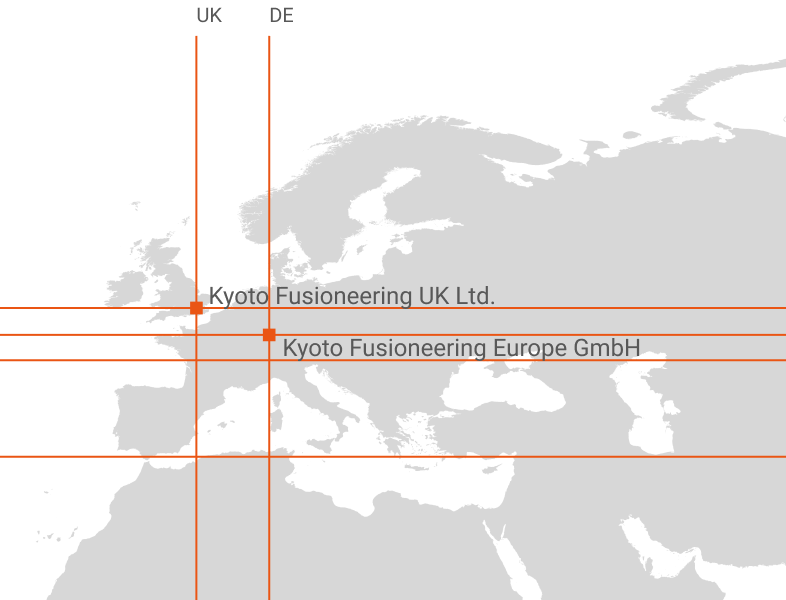
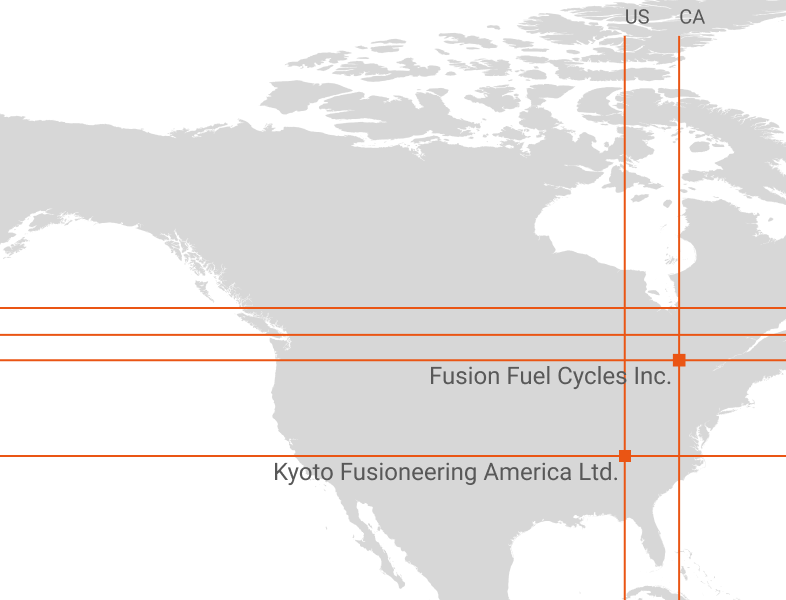
Kyoto Fusioneering is the world’s premier fusion technology and integrated systems developer. It delivers essential plasma heating, breeding blanket, power generation, and tritium fuel cycle systems to advanced fusion programs worldwide. KF operates globally across Japan, U.S., U.K., Europe, and a joint venture in Canada. Visit us at kyotofusioneering.com. Join the conversation on XLinkedIn, and YouTube

About Oak Ridge National Laboratory 

Oak Ridge National Laboratory is the largest multi-program science and technology laboratory in the U.S. Department of Energy complex, with longstanding leadership in fusion and nuclear science, neutron science, materials research, advanced manufacturing, and supercomputing. UT-Battelle manages ORNL for DOE’s Office of Science, the single largest supporter of basic research in the physical sciences in the United States. For more information, visit energy.gov/science

About the Tennessee Department of Economic and Community Development (TNECD)

TNECD is the state’s primary agency committed to fostering economic growth through job creation and community development. By attracting new corporate investment and facilitating the growth of existing businesses, the department works to strengthen Tennessee’s competitive landscape. Additionally, TNECD strives to increase the economic prosperity for all Tennesseans by providing grants to communities statewide, helping them to become vibrant, business-friendly environments where companies can flourish. For more information, visit us at tnecd.com. Join the conversation on Twitter, Instagram, LinkedIn, Facebook and YouTube.

Artist’s rendering of UNITY-3, a first-of-its-kind breeding blanket test facility to be jointly delivered by Kyoto Fusioneering and Oak Ridge National Laboratory.

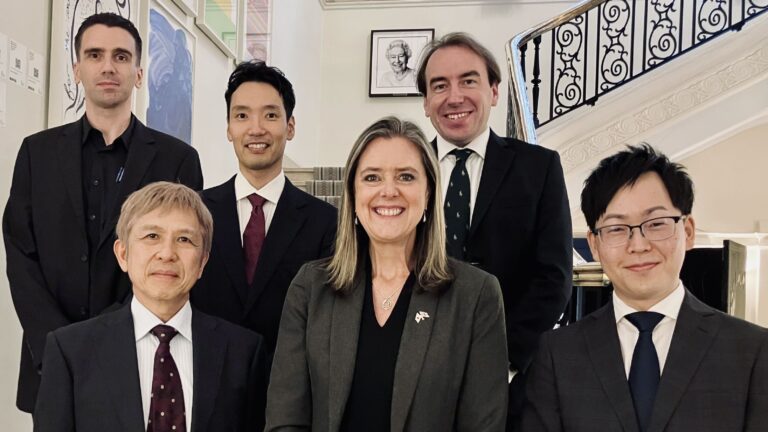
Oak Ridge National Laboratory (ORNL) and Kyoto Fusioneering leadership pictured at ORNL. From left to right: Shaun Gleason (ORNL), Joe Hoagland (ORNL), Arnie Lumsdaine (ORNL), Christian Day (KF), Colin Baus (KF), Satoshi Konishi (KF), Bibake Uppal (KF), Stephen Streiffer (ORNL), and Takashi Imai (KF).
CATEOGRY
ARCHIVE