
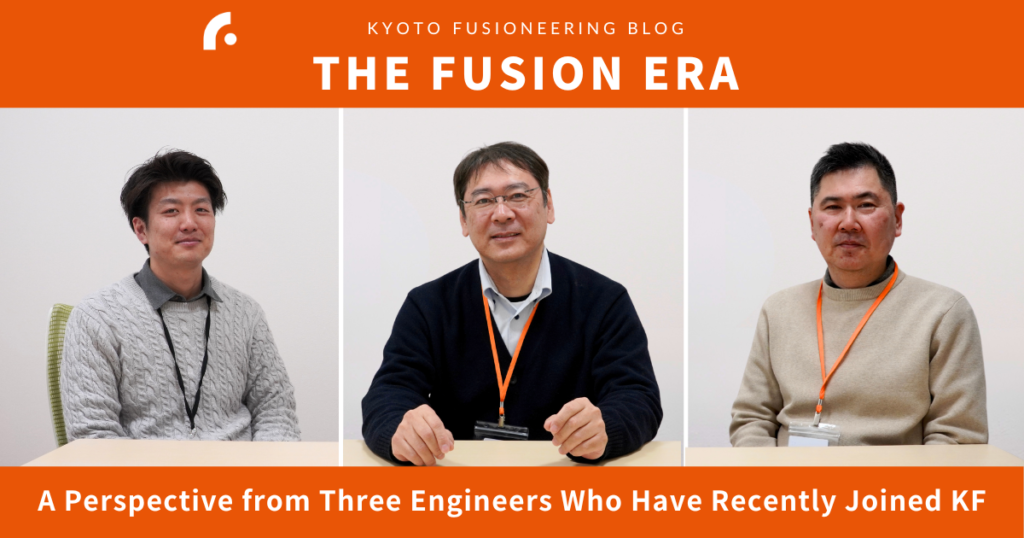
When we attend exhibitions and events around the world, we often meet people who ask:
“What kind of work did fusion engineers do before enter the fusion energy industry?”
To answer this frequently asked question—who joins this industry, what experiences they bring, and why they choose fusion—we interviewed three engineers who joined us earlier this year to find out.
We also asked them about what motivated them to join Kyoto Fusioneering (KF), what they’ve experienced since coming onboard, and how they collaborate within their teams.
The three engineers featured in this interview are:
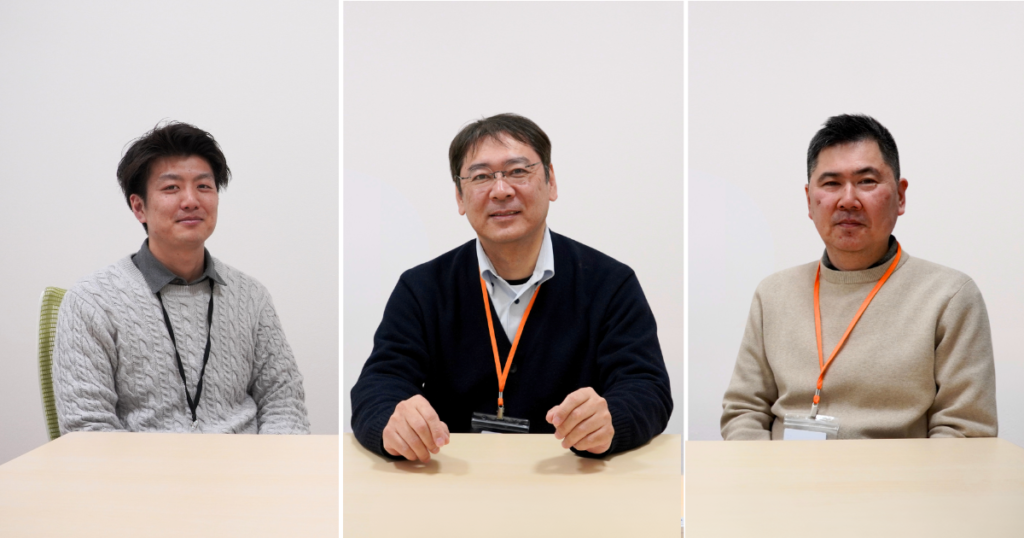
- Shogo Sase from Plasma Heating Division(left)
- Tetsuya Yonezawa from Plasma Heating Division (middle)
- Kenichiro Kobayashi from Plant Technology Division (right)
What led you to choose the fusion energy industry, and to join KF?
Shogo:
In my previous role at an engineering company, I handled construction and facility management for high‑voltage electrical systems and power generation equipment. Over time, I realized that my ambition was to work not just on electrical systems but on larger plant‑scale projects.
I also had a long‑standing dream of working abroad, so I started looking for engineering companies with global operations. That’s when I heard about an emerging fusion-energy focused company KF.
I was fascinated by fusion energy’s potential as a next‑generation power source, and I felt KF would allow me to grow as an engineer while working on international projects. That’s why I decided to join.
Kenichiro:
I’ve spent decades working as a control engineer, and I’d been wanting to use my skills to help solve social challenges. Around that time, by coincidence, I came across KF’s job posting. I didn’t know much about fusion energy then, but as I researched it, I learned how it can address issues like resource shortages, food insecurity, and global warming. I realized this was a field where my engineering experience could make a real contribution so I decided to make the leap and enter the fusion sector.
Tetsuya:
After many years working in manufacturing, I wanted to apply everything I’d learned—both knowledge and technical skills—to help advance fusion energy, a new and exciting field.
Also, I was particularly attracted to KF’s focus on engineering the surrounding technologies of fusion plants rather than the reactor core itself. That distinctive strength convinced me to join.
What projects are you currently involved in, and what are your responsibilities?
Shogo:
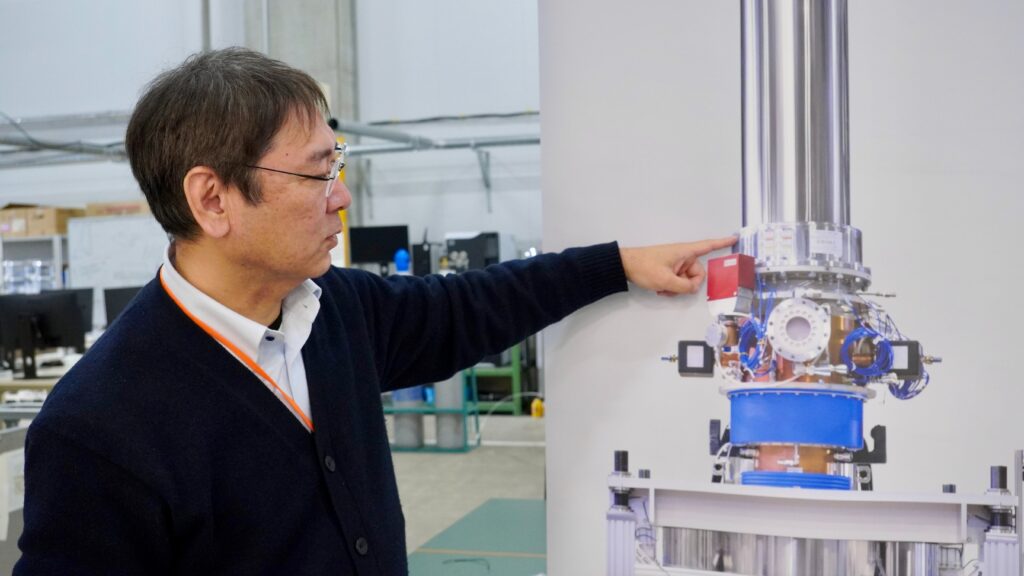
I’m part of the Plasma Heating Division, which develops the gyrotron system—a plasma heating system essential for fusion devices. I work on the electrical power supply system and related interfaces. This includes coordinating specifications, delivery timelines, and safety requirements between customers and manufacturers, creating installation manuals, and supervising on‑site work.
There’s a lot to learn about fusion energy basics, the gyrotron system’s mechanism, and much more besides. But thanks to experienced members with whom I work closely, including our CTO Dr. Sakamoto, I receive clear answers to my questions and can quickly deepen my understanding. This supportive environment helps me work with speed and confidence.
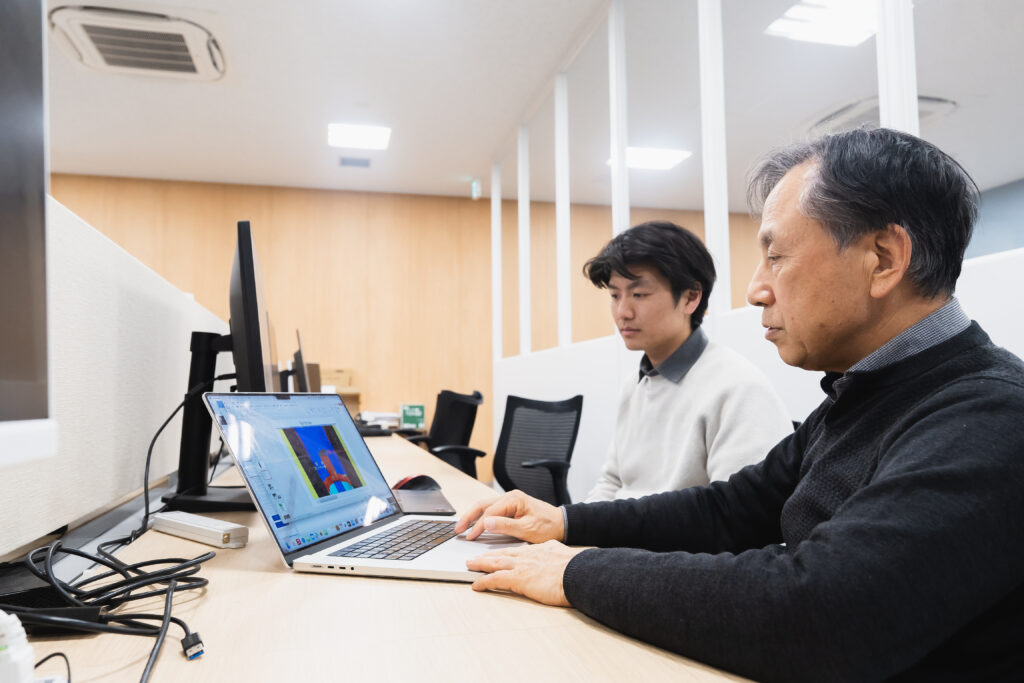
Kenichiro:
I belong to the Plant Technology Division, working as an instrumentation engineer for UNITY‑2—an integrated test plant for the fusion fuel cycle, which continuously supplies fuel for fusion reactions. I’m mainly responsible for selecting measurement and fluid‑control equipment and designing the wiring layout for UNITY‑2.
Right after joining, I was overwhelmed by the amount of information—equipment specs, stakeholder names, everything. But the team patiently helped me learn. Regardless of division, everyone at KF is passionate about making fusion energy a reality, and working alongside them is incredibly inspiring.
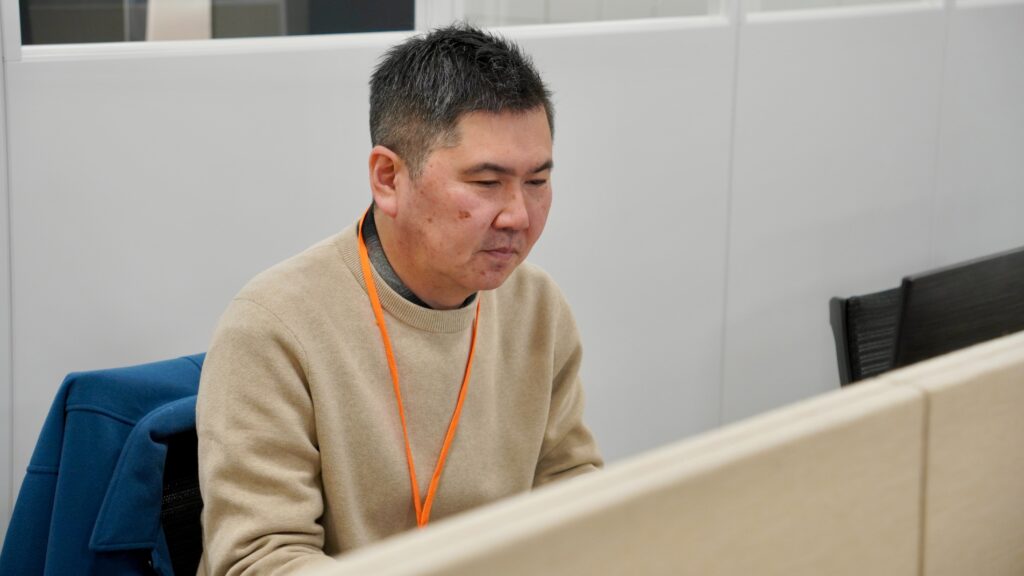
Tetsuya:
I’m also part of the Plasma Heating Division, like Shogo, but my work is more R&D‑oriented. I design cooling devices for the cavity and collector used in high‑power gyrotron systems.
(For more about gyrotron components, see our related blog post.)
KF’s project pace is extremely fast. Sometimes it feels challenging to keep up, but the team actively shares issues and progress, collaborating closely toward common goals. It’s easy to consult others, and the environment is very supportive. Thanks to the close communication, I’m already learning a lot from experts in other fields and feel I can continue taking on new challenges here.
What do you hope to achieve at KF?
Shogo:
First, I want to deepen my knowledge of high‑voltage power supplies and plasma heating systems so I can contribute more to our projects and R&D. I also want to improve my English skills to communicate more smoothly with overseas customers.
Kenichiro:
I want to increase my knowledge and expertise required for instrumentation engineering and then use my background in software engineering to help design equipment and systems. I hope to collaborate effectively with partner companies, dividing roles based on our respective strengths to produce better outcomes.
Tetsuya:
Drawing on my past experience—from design to prototyping and evaluation—I want to contribute more broadly to gyrotron system development and help achieve higher efficiency and higher output.
The three engineers featured in this interview all joined us from outside the fusion energy industry. By applying their engineering experience and learning new fusion‑related skills from their teammates, they are already expanding their roles within KF.
As a fusion engineering company, KF combines Japan’s manufacturing excellence with cutting‑edge innovation to take on one of humanity’s greatest challenges—and bring a sun on Earth to life.
Subscribe to Our Newsletter (LinkedIn)